
Cambridge collects garden waste free, unlike most councils. Extra bins cost £52. Rounds run Tuesday to Friday, so most bank holidays change nothing at all.
Cambridge does two things differently from most of the country, and both save residents money. The green bin takes garden waste at no charge, where most councils now run a paid subscription. And bin rounds run Tuesday to Friday, so a Monday bank holiday moves nothing.
That second point matters this week. Monday 31 August is the summer bank holiday, and Greater Cambridge Shared Waste has published no changes to collections. It has not needed to.
Bins in Cambridge are collected by the Greater Cambridge Shared Waste Service, a joint operation between Cambridge City Council and South Cambridgeshire District Council covering around 131,000 households. Everything below was read from its own pages on 30 August 2026.
The three bins, and the caddy that is coming
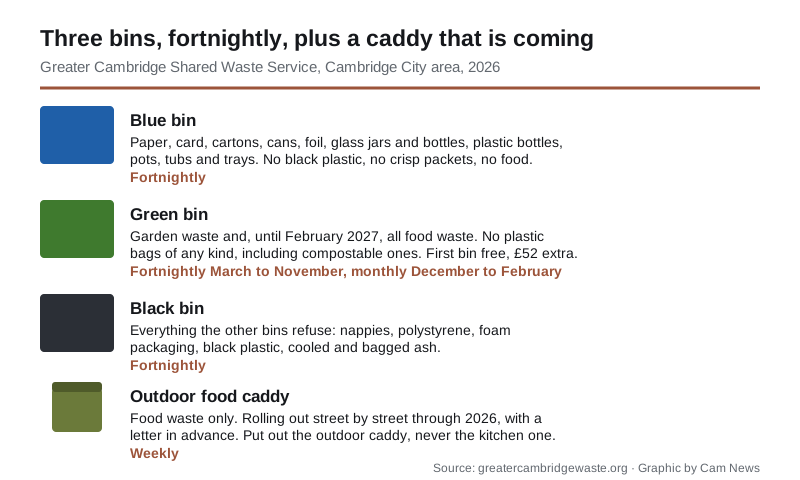
The service runs an alternate weekly collection. Your black bin goes out one week and your blue and green bins the next, so every bin is emptied fortnightly. The green bin drops to monthly between December and February, when there is far less garden waste.
The council’s what are your bins for page sets out what belongs in each.
Blue bin, mixed dry recycling. Paper, card, cartons, empty plastic bags, plastic bottles, pots, tubs and trays, cans, empty aerosols, foil, glass jars and bottles. Shredded paper has to be bagged in paper or a clean plastic bag first.
Black plastic is not recyclable in Cambridge and goes in the black bin. Nor are crisp packets, Pyrex, mirrors, kitchen roll or anything greasy.
Green bin, garden and food waste. Grass, leaves, prunings, untreated wood, straw and sawdust, plus all food waste including meat, fish, dairy and cooked leftovers. Wrap food in paper bags or newspaper. The council is explicit that compostable and biodegradable “plastic” bags are banned, because they do not break down fast enough.
Black bin, everything else. Nappies, polystyrene, foam packaging and cooled, bagged ash.
Batteries never go inside any bin. They start fires in the lorries. Put them in a small tied plastic bag and leave it on top of a closed bin lid instead.
Weekly food waste caddies are arriving through 2026
The biggest change to Cambridge bins in years is happening now, one round at a time. Every household in Cambridge and South Cambridgeshire is getting a weekly food waste collection during 2026, in a separate caddy, under new national legislation.
Two things follow from that:
- You get a small indoor kitchen caddy and a larger, animal-proof outdoor caddy with a locking handle. Put out the outdoor one only. The kitchen caddy will not be emptied.
- From February 2027 the green bin stops accepting food waste. Until your caddy arrives, food still goes in the green bin as normal.
The council writes to each household in advance with its start date, and the dates appear on the online calendar. One caveat worth knowing: the service will not return for a missed food caddy, though it still asks you to report it.
Finding your day
Put your postcode into the council’s bin collection day lookup. It returns a dated calendar for black, blue, green and food waste, which you can print or subscribe to from a phone calendar.
Bins must be out by 6am on the day, with the lids closed.
Bank holidays and Christmas
Cambridge is unusually well insulated from bank holidays, because collections run on a four-day week. Looking at the council’s own change tables, no round falls on a Monday. Mondays are used as catch-up days instead.
Easter 2026 shows how little moves. Only Good Friday collections changed, and they went out four days early on Monday 30 March. Everything else stayed put.
Christmas is the exception, and the changes are worth diarising. These were the 2025 into 2026 arrangements:
| Usual day | Revised day | Change |
|---|---|---|
| Wednesday 24 December | Wednesday 24 December | No change |
| Thursday 25 December | Monday 22 December | 3 days early |
| Friday 26 December | Monday 29 December | 3 days late |
| Tuesday 30 December | Tuesday 30 December | No change |
| Wednesday 31 December | Wednesday 31 December | No change |
| Thursday 1 January | Friday 2 January | 1 day late |
| Friday 2 January | Saturday 3 January | 1 day late |
Green bins also switch to monthly from 23 December to 2 March. Expect a similar pattern this December, but check the calendar rather than assuming: the dates fall differently each year.
Garden waste: free, unless you want a second bin
Every household gets one green bin emptied free of charge. That is the headline, and it is becoming rare. Neighbouring authorities across England charge £40 to £75 a year for the same service.
Additional bins are where the charge starts. The permit page gives the terms:
- £52 per additional bin for 2026/27, up from £50.
- Permits run 1 October to 30 September. The price is fixed whenever you pay, with no concessions and no pro rata.
- A maximum of three additional bins, so four in total.
- Sales are suspended until 1 October, when the new subscription year opens.
Bins are the standard 240 litre size and stay the property of the waste service.
Bulky waste: £40 for up to three items
The bulky collection service prices in blocks rather than per item:
- £40 minimum, covering one, two or three items.
- £6.50 each for items four to nine.
- Nine items maximum per booking, which can include up to three 80 litre bags of garden or general waste.
- £32.50 per item for hazardous electrical goods such as fridges, which need separate handling and a separate booking.
Watch the item count. A three-seater sofa counts as three items on its own, so it uses up the whole £40 minimum. The crew will not take anything that was not listed when you booked, and will not enter your property: items go at the kerb by 6am.
Before booking, it is worth checking whether Emmaus, Cambridge Re-Use or the British Heart Foundation will collect the item for free instead.
Missed collections: report by 3.30pm the next weekday
The reporting window is narrow and precisely defined.
- You can report from 3.30pm on collection day, not before. Crews sometimes run late or work a round in a different order.
- You then have until 3.30pm the next weekday to report it.
- Miss that window and there is no return visit until your next scheduled collection.
If the crew left a card, the bin was rejected rather than missed, and the answer is to fix the problem before the next collection. If there was no card, report it and leave the bin out. The service aims to return within three working days.
A return is conditional. The bin has to have been out by 6am, accessible, correctly used, and with nothing recorded against it by the crew such as contamination or being too heavy.
The tip: Milton, no booking needed
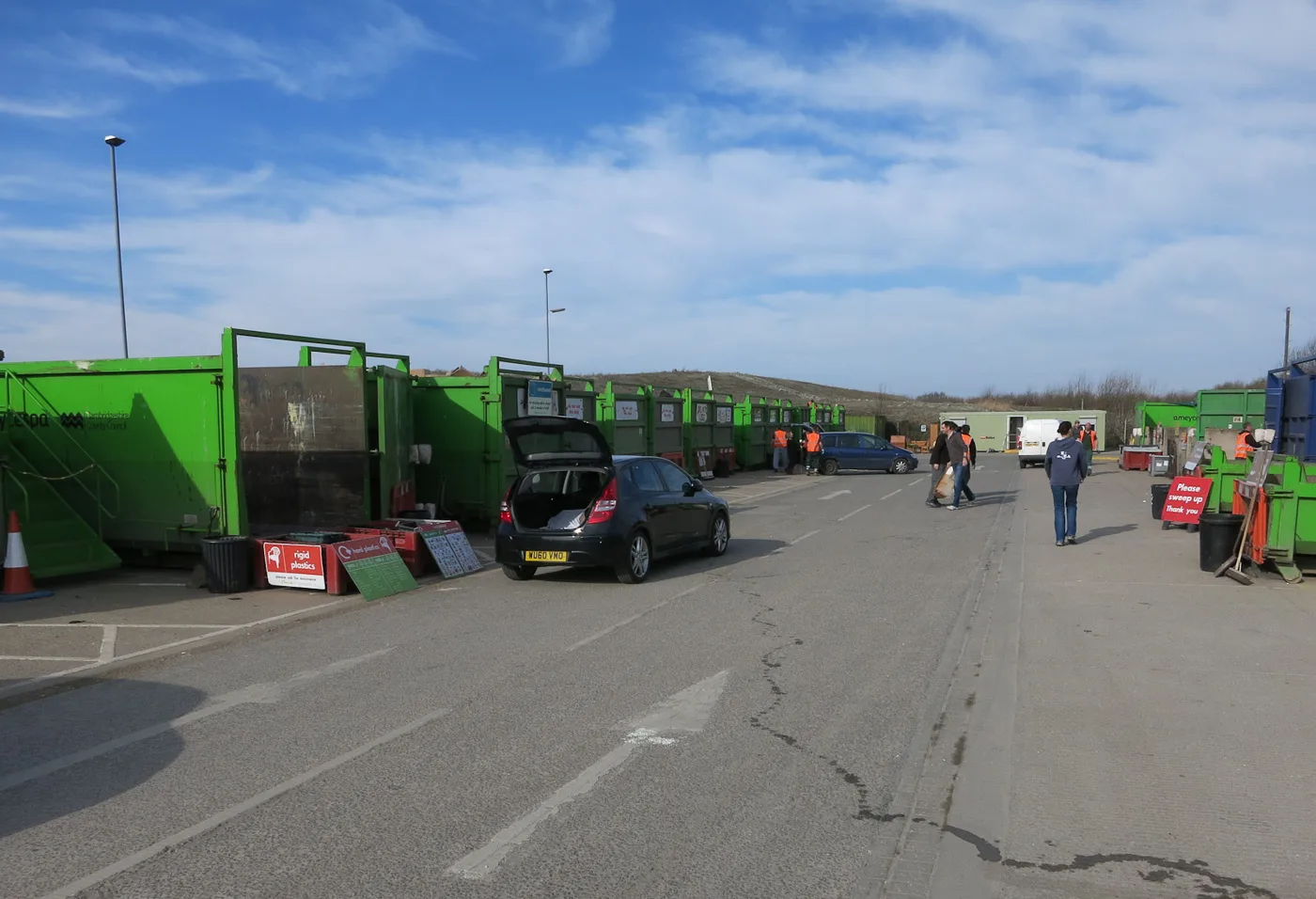
Household recycling centres are run by Cambridgeshire County Council, not the city council, and are operated under contract by Thalia. There are nine across the county. The nearest to Cambridge is Milton, on Butt Lane, CB24 6DQ.
| Opening hours | |
|---|---|
| April to September, Monday to Friday | 9am to 8pm |
| April to September, Saturday and Sunday | 9am to 6pm |
| October to March, every day | 9am to 4pm |
Entrance gates shut ten minutes before closing, and the site may close at dusk if that comes earlier. Booking is not required, which is no longer true of every county in England.
Three rules catch people out:
- Vans, pick-ups and other commercial-type vehicles need an e-permit, as does any trailer over 1.5m long or 570 litres.
- Vehicles must be under 5.5m long and 2.3m high.
- Children under 12 have to stay in the vehicle, and pedestrians cannot use the site at all.
On bank holidays Milton runs Sunday hours. It closes on Christmas Day, Boxing Day and New Year’s Day, and shuts early at 1pm on Christmas Eve and 4pm on New Year’s Eve.
Related
- Cambridge council tax bands, including what the city council keeps of your bill
- Parking in Cambridge, car park by car park
- Cambridge roadworks and travel
Have your say