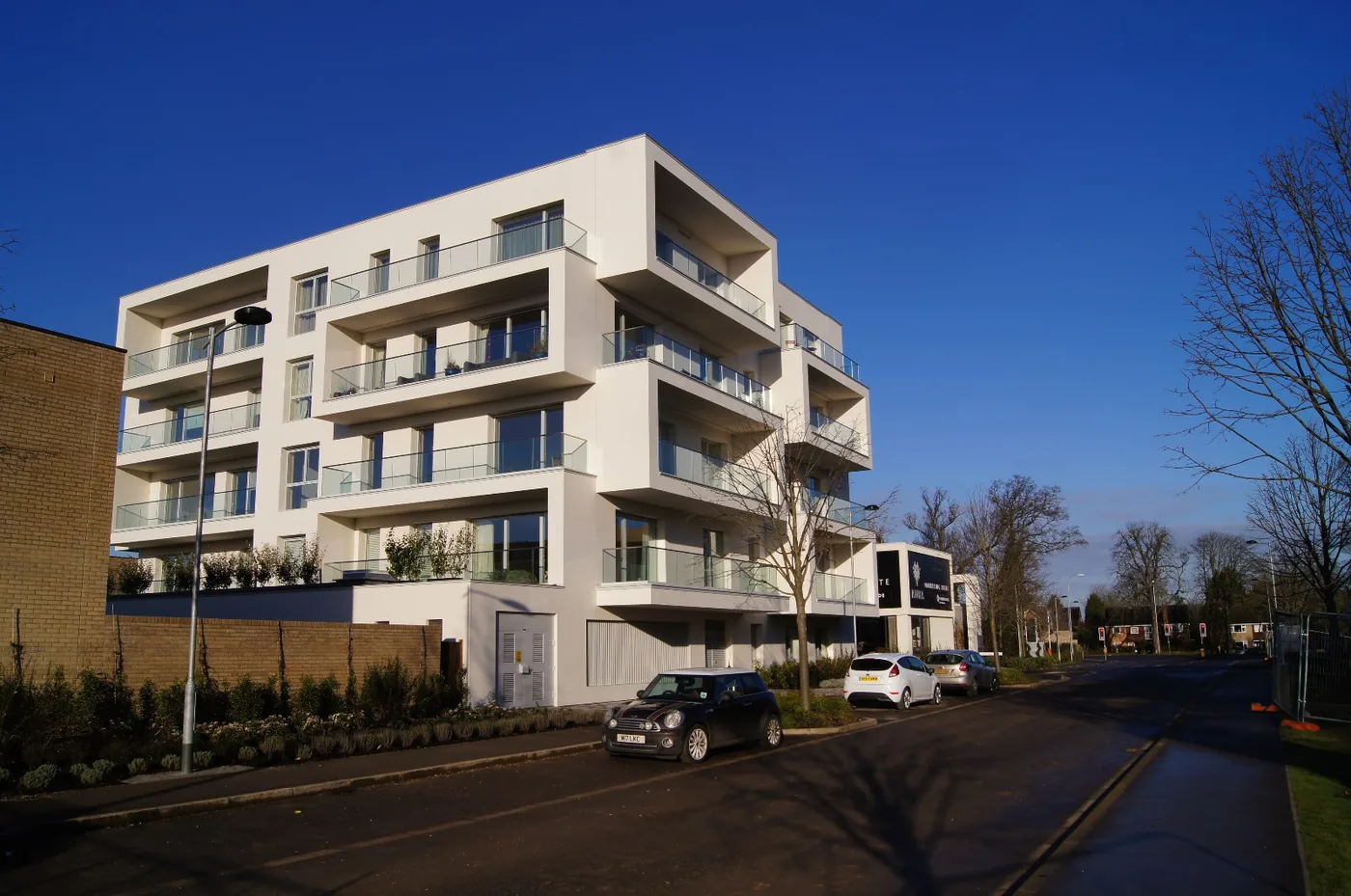

The Greater Cambridge Local Plan wants over 50,000 homes by 2045 and consultation shuts at 5pm on 25 September. Plus the corporation set to take planning powers.
Two things are happening to Cambridge planning at once, and they point in different directions. The councils are running the final consultation on a Local Plan that would shape the city to 2045, and the government has said it intends to set up a corporation that would take the biggest planning decisions off those councils once that plan is done.
If you want a say in either, the consultation deadline is 5pm on Friday 25 September 2026.
The Local Plan: over 50,000 homes to 2045
The Proposed Submission Greater Cambridge Local Plan is the first joint plan for Cambridge city and South Cambridgeshire, prepared through the shared planning service the two councils run together. It sets a requirement for over 50,000 new homes between 2024 and 2045, along with the workplaces, schools and infrastructure meant to go with them.
The number that matters for how much changes on the ground is the second one. Around 37,000 of those homes are already planned, through existing planning permissions and allocations in the adopted Local Plan. So the genuinely new allocations in this document account for something over 13,000 homes, not 50,000. Clay Farm, the southern fringe and the developments already under way around Trumpington and Darwin Green are part of the 37,000, not additions to it.
Two changes since the draft version are worth noting. The Cambourne North site boundary has been updated after further evidence, and the capacity of the site on land adjacent to the A11 and A1307 at Grange Farm has been reduced, again on the evidence.
This consultation is narrower than the last one
The consultation running now is a Regulation 19 stage, and it is not a general invitation to comment on where houses should go. It asks only whether the plan meets the national tests of soundness: whether it is positively prepared, justified, effective and consistent with national policy. The councils say plainly that proposals for new sites will not be considered at this stage.
| Stage | When |
|---|---|
| Proposed Submission consultation opens | 3 August 2026 |
| Consultation closes | 5pm, 25 September 2026 |
| Plan submitted to government | By the end of December 2026 |
| Independent examination expected to begin | Early 2027 |
The development corporation that would replace the councils
On 2 June 2026 the government confirmed it intends to establish an Urban Development Corporation for Greater Cambridge. If it goes ahead as described, the corporation would become the local planning authority for:
- any development of more than 250 homes, and
- new commercial buildings over 5,000 square metres.
It would also replace the councils in preparing Local Plans once the current Greater Cambridge Local Plan has run its course. In other words, the plan being consulted on now could be the last one written by councillors people in Cambridge elect.
The scale is not incremental. The proposed area is nearly double the combined size of all 17 previous urban development corporations and over ten times larger than the Milton Keynes Development Corporation.
The government’s own consultation did not find enthusiasm for it. 59% of respondents opposed the development corporation and 61% opposed giving it plan-making powers. Cllr Katie Thornburrow, leader of Cambridge City Council, said the council welcomes government investment but that “we believe it must be done in ways that respect the democratic process”, raising concerns that the corporation would “reduce the ability of local people to shape their future” and asking for clarity on how it would be financed, which areas it would cover and what would happen to the existing planning service.
The 8,500 homes that are not happening
The clearest illustration of how Cambridge growth actually gets decided is North East Cambridge, and it is a cautionary one.
The plan was to move the Cambridge Waste Water Treatment Plant off its Cowley Road site to a new location between Horningsea, Fen Ditton and Stow cum Quy, freeing the land for a new city district. The Secretary of State granted the Development Consent Order on 8 April 2025. Then in August 2025 the Ministry of Housing, Communities and Local Government confirmed that Housing Infrastructure Fund money would not be made available for the relocation, after costs rose sharply on materials, labour and supply chains.
Without the funding, the council and Anglian Water’s Hartree proposal on the existing works site cannot be delivered. That scheme was the heart of a district that would have carried over 8,500 homes, two schools, community, cultural, leisure and health facilities and more than 19 hectares of open space. Consent existed; the money did not.
What the councils are building themselves
Against that, Cambridge City Council’s own housebuilding is one of the more unusual records in the country. It has built over 850 council homes since 2017 across 27 sites, making it one of the few councils to have increased rather than shrunk its housing stock. Most have come through the Cambridge Investment Partnership, its joint venture with The Hill Group.
On 7 July 2026 its Cabinet approved plans for 90-plus more council homes across six city sites, predominantly three and four bedroom family homes, with at least five built specifically for wheelchair users:
- Queen’s Meadow, Cherry Hinton: up to 12 homes
- Hawthorns Community Centre, King’s Hedges: the council is buying the vacant centre and would replace it with up to 30 homes
- Horizon Resource Centre, Coldham’s Lane: around 40 homes, working with the county council, which owns the site
- Nine further homes at sites in East Chesterton, Trumpington and Coleridge, already under way
The council puts the total at homes for at least 300 people. Alongside the housing, its building programme has delivered five community centres, seven parks and play areas, two pre-schools, a library, new shops and £12.2 million towards local infrastructure.
The planning committee, and how to follow it
Cambridge City Council’s Planning Committee meets at the Guildhall and decides the major applications inside the city boundary. Its most recent decision, on 29 July 2026, was to approve St John’s College’s scheme to demolish the buildings at Wolfson Court, Clarkson Road and 15 and 15A Madingley Road in Newnham and replace them with purpose-built student accommodation.
To look up a specific application, use the Greater Cambridge planning register. One thing to watch: that register is shared between Cambridge City Council and South Cambridgeshire District Council, so a search that does not filter by authority returns applications from both. Check the address before assuming a scheme is in the city.
There is also a wider change coming. Local government in Cambridgeshire and Peterborough is under reorganisation, and in July 2026 the councils across the area jointly urged the government to make a prompt decision on it. Whatever emerges will sit underneath, or alongside, the development corporation.
Frequently asked questions
How many homes does the Greater Cambridge Local Plan propose?
Over 50,000 between 2024 and 2045, of which around 37,000 are already planned through existing permissions and allocations in the adopted plan.
When does the Greater Cambridge Local Plan consultation close?
5pm on Friday 25 September 2026. It opened on 3 August. The plan goes to government by the end of December 2026 and examination is expected to start in early 2027.
Can I still object to a housing site in this consultation?
Only on soundness grounds. This stage asks whether the plan is positively prepared, justified, effective and consistent with national policy. The councils have said proposals for new sites will not be considered at this stage.
What is the Cambridge development corporation?
An Urban Development Corporation confirmed by government on 2 June 2026, which would become the planning authority for schemes of more than 250 homes and commercial buildings over 5,000 square metres, and would take over plan-making from the councils after the current Local Plan.
What happened to the 8,500 homes at North East Cambridge?
The Development Consent Order to relocate the waste water treatment plant was granted in April 2025, but in August 2025 the government confirmed it would not fund the move. The Hartree development on the existing works site cannot be delivered without it.
Sources
- Cambridge City Council, updated Greater Cambridge Local Plan published ahead of final public consultation, 8 July 2026 for the 50,000 and 37,000 figures, the Cambourne North and Grange Farm changes, and the consultation and submission dates.
- Greater Cambridge Shared Planning, Proposed Submission Greater Cambridge Local Plan for the consultation itself and the soundness tests.
- Cambridge City Council, initial response to government’s development corporation for Greater Cambridge, 3 June 2026 for the corporation’s proposed powers and thresholds, the area comparison, the consultation results and Cllr Thornburrow’s response.
- Cambridge City Council, government decision not to fund Cambridge Waste Water Treatment Plant relocation, 15 August 2025 for the funding refusal and the effect on Hartree and North East Cambridge.
- South Cambridgeshire District Council, plans to relocate Cambridge waste water treatment plant approved by Secretary of State for the April 2025 Development Consent Order.
- Cambridge City Council, 90+ new council homes set to be built across six Cambridge sites, 8 July 2026 for the six sites, the 850 homes since 2017 and the £12.2 million infrastructure figure.
- Cambridge City Council, Planning Committee, 29 July 2026 for the Wolfson Court decision.
- Greater Cambridge planning register for individual applications.
Checked 9 August 2026. The development corporation is a stated government intention rather than an established body, and its thresholds could change before it is set up. Local Plan dates are statutory but can be revised, so confirm on the councils’ own pages. What all this means for prices is on Cambridge house prices; what it means for the roads is on Cambridge roadworks and travel.
Have your say