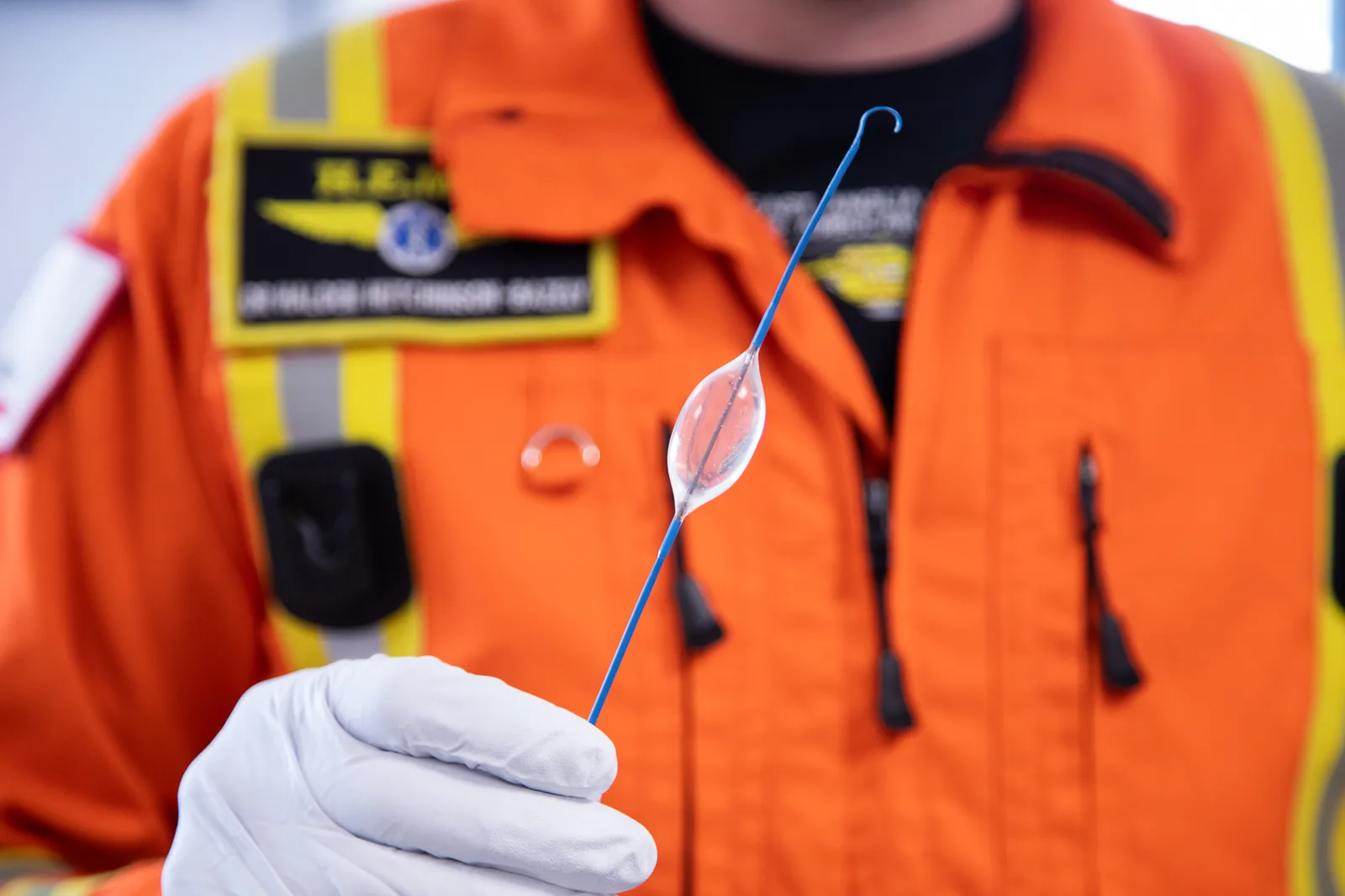

East Anglian Air Ambulance crews inflated a balloon in the main artery of 39 cardiac arrest patients at the scene, with no complications. Survival is unproven.
East Anglian Air Ambulance crews have used a balloon inside the body’s main artery to treat people in prolonged cardiac arrest at the scene. The charity says it is the first time the procedure has been done in pre-hospital emergency care.
The pilot, called ERICA-ARREST, treated 39 patients. The charity reports no complications from the procedure, and a clear rise in blood pressure once the balloon was inflated. It announced the findings on its website on 10 November.
The study was led by Dr James Price, a consultant emergency physician at Cambridge University Hospitals. He is also the charity’s consultant lead for research and development.
How the balloon works
The procedure is called REBOA, short for Resuscitative Endovascular Balloon Occlusion of the Aorta. It is usually used in hospital to control life-threatening internal bleeding.
A small balloon is passed through an artery in the groin and inflated inside the aorta. In cardiac arrest, that temporarily blocks blood flow to the lower body. The aim is to send more of the blood that CPR moves towards the heart and the brain.
It is meant for patients whose hearts cannot be restarted by standard treatment.
What the study found
The charity’s release gives these results:
- 39 patients took part, with a mean age of 58.7, all with non-traumatic cardiac arrest outside hospital
- the balloon went in a median of 51 minutes after the arrest began
- there were no procedure-related complications
- diastolic blood pressure rose by 59% on average after inflation
- the balloon was confirmed to have blocked the aorta in 33 patients
- of those 33, 24.2% had their hearts restart and keep beating, and 6.1% survived to leave hospital
Those percentages work out at eight patients and two patients respectively.
Why the survival figures need care
The researchers stress that the survival figures should be read with caution. The study had no control group. It was designed to test whether crews could do the procedure safely and whether it changed blood flow, not whether it saves lives.
Dr Price said: “Patients who remain in cardiac arrest despite prolonged resuscitation efforts currently have very limited treatment options and face extremely poor outcomes.
“While this study was not designed to determine whether REBOA improves survival, these findings provide a strong foundation for further research and represent an important step forward in exploring new treatment options for this group of patients.”
The release does not say where the full results have been published. The trial is registered as NCT06071910, and the charity’s ERICA-ARREST page says the Department of Health and Social Care paid for the equipment and training, at around £5,000 per patient recruited.
Who did the work
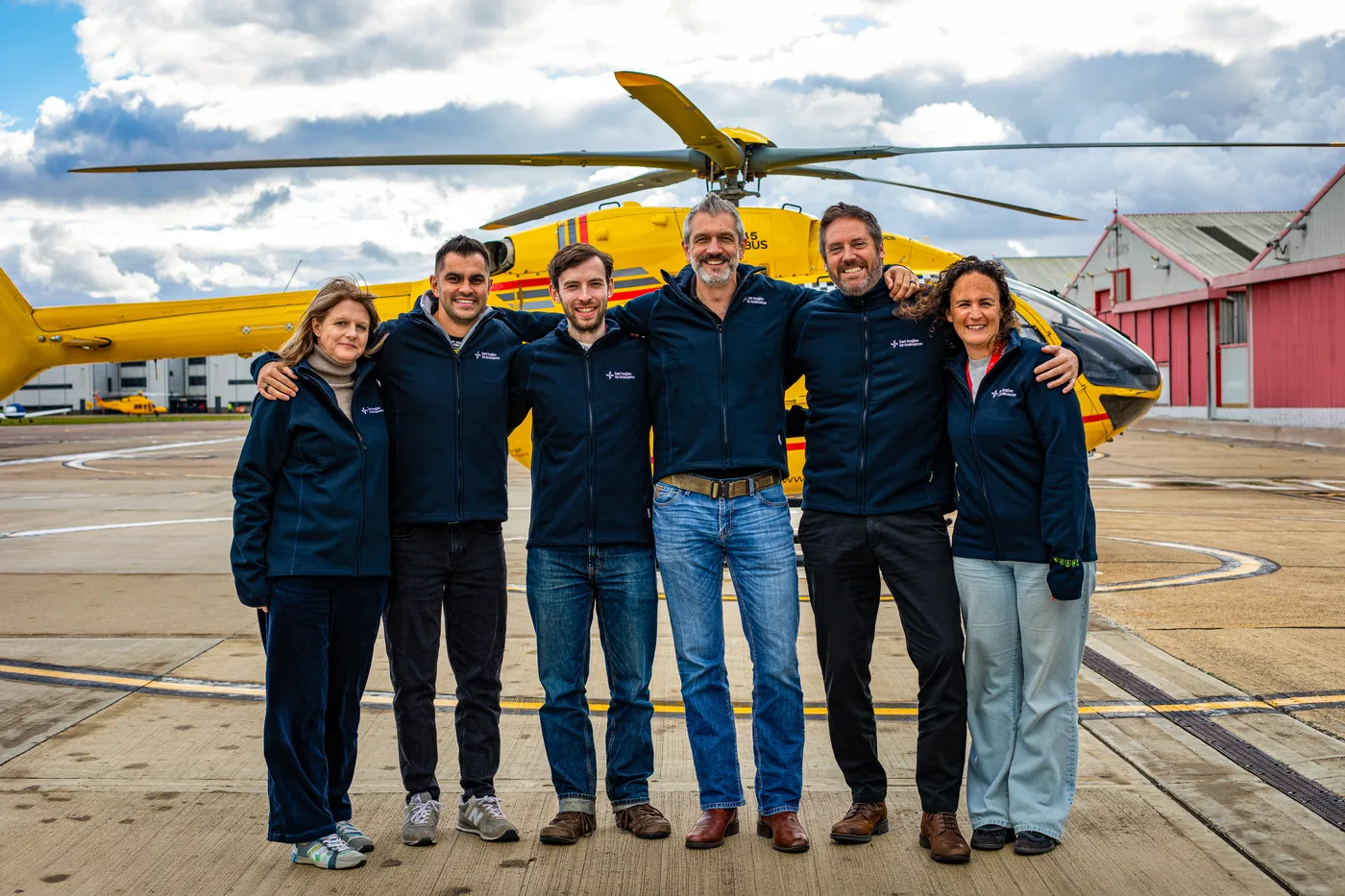
The study came from the charity’s Research, Audit, Innovation and Development group, known as RAID. The same group is behind the handheld blood test for brain bleeds that its crews now use at the scene.
The charity says up to 30% of the medical emergencies it attends are cardiac-related. It covers Bedfordshire, Cambridgeshire, Norfolk and Suffolk from bases in Cambridge and Norwich.
Dr Price said the research programme is “led by clinicians who look after these patients every day and want to find better ways of treating them”. He said the work had also “helped improve the day-to-day care we can provide to patients, irrespective of the ERICA-ARREST trial”.
What it means for you
Nothing changes yet for someone who has a cardiac arrest in Cambridgeshire. The study shows the procedure can be done safely at the roadside. Whether it saves more lives needs a larger trial with a comparison group.
What makes the biggest difference is still what happens in the first minutes: calling 999, starting CPR and using a defibrillator.
The charity is also raising money for a new Cambridge base at Fulbourn, because Cambridge City Airport, where its crews are based now, is due to close by 2030.
Sources
- ERICA-ARREST pilot study findings revealed, East Anglian Air Ambulance, 10 November 2026, and the charity’s release sent to Cambridge Local News
- ERICA Arrest Trial, East Anglian Air Ambulance
- NCT06071910, ClinicalTrials.gov
Have your say