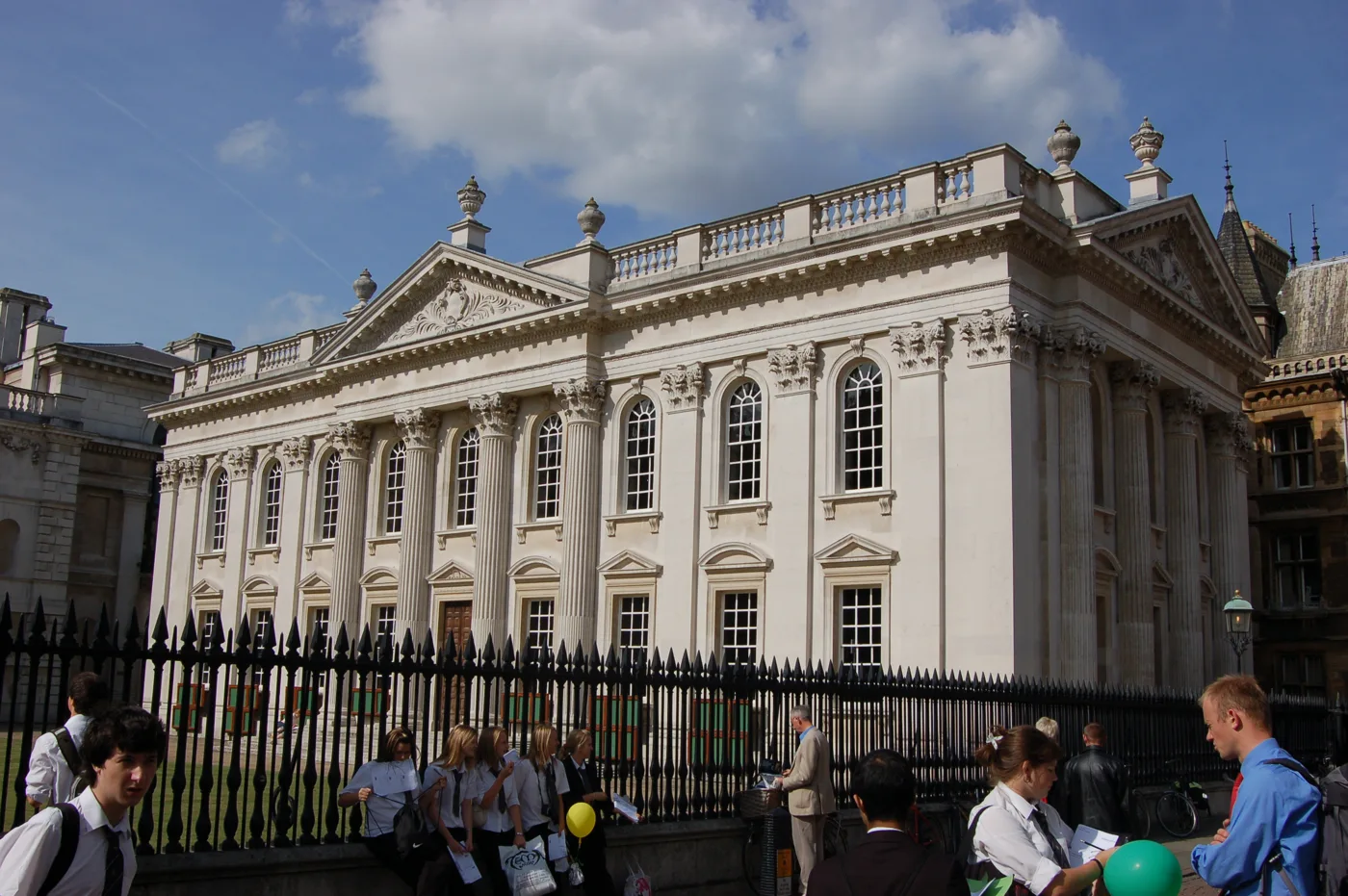

Cambridge held fourth place in the Good University Guide 2027. Its own students rank it last of 146 UK universities for the clarity of its marking criteria.
The University of Cambridge finished fourth in The Times and The Sunday Times Good University Guide 2027, published on Friday. The University of St Andrews took first place.
St Andrews, in Fife on the east coast of Scotland, announced the result on its own news site on Friday 18 September. Its statement says it “places ahead of The London School of Economics, Imperial College, Cambridge and Oxford in the Guide’s 2027 top five”. That puts Cambridge fourth and Oxford fifth.
It is the third time in six years St Andrews has topped what it calls the UK’s longest-running university league table.
St Andrews said the guide credits its success to student satisfaction, research quality, demanding entry tariffs, an international outlook and graduate prospects. By Saturday lunchtime the University of Cambridge had published nothing about the table on its own news pages.
The guide’s full table sits behind a paywall and we have not seen it. The survey that measures student satisfaction is public, free and published by the regulator, so that is where the rest of this story comes from.
It shows Cambridge at the top of the country on the things the university is known for, and at the bottom of it on how students are marked and heard. On the clarity of its marking criteria, Cambridge’s own undergraduates rate it last of the 146 UK universities and colleges with a comparable number of responses.
What Cambridge students actually said
The National Student Survey asks final-year undergraduates to rate their course. The 2026 results were published by the Office for Students on 8 July 2026. Cam News downloaded the full provider-level spreadsheet and pulled out the rows for both of the city’s universities.
At Cambridge, 1,941 students responded, a response rate of 57.7 per cent. Here is how they scored the seven themes, against the UK average for full-time students.
| Theme | Cambridge | UK full-time average |
|---|---|---|
| Teaching on my course | 93.2% | 88.1% |
| Learning opportunities | 86.9% | 85.9% |
| Assessment and feedback | 75.5% | 82.5% |
| Academic support | 93.4% | 89.4% |
| Organisation and management | 77.4% | 80.9% |
| Learning resources | 93.4% | 88.9% |
| Student voice | 73.0% | 80.7% |
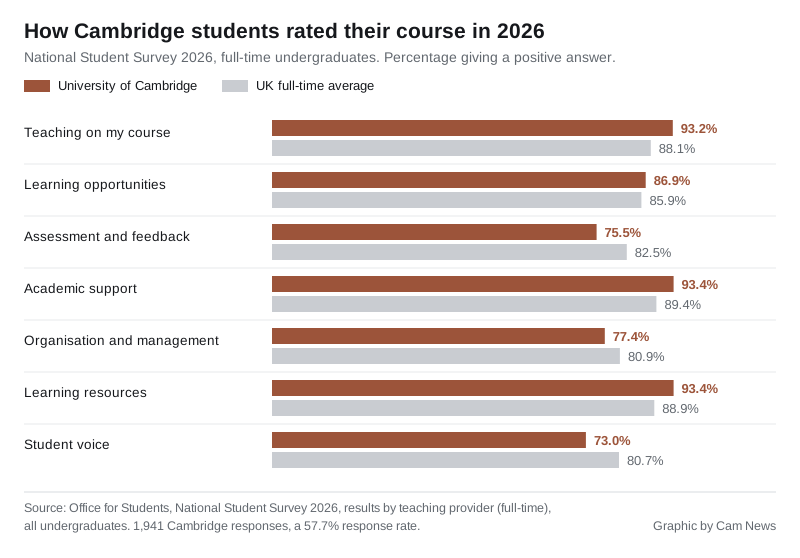
On teaching, support and resources Cambridge is well clear of the rest of the country. Its students were the most likely in the survey’s terms to call the course demanding and interesting. Cambridge scored 97.3 per cent on how often the course is intellectually stimulating, against 86.2 per cent nationally, and 95.9 per cent on library resources.
On three themes it sits below the national figure, and that is the part the guide punishes.
The five questions where Cambridge trails
The Office for Students does not only compare a university with the raw national average. It builds a benchmark for each provider, which it describes as “a prediction of what the NSS results for the sector would have been, had the sector had the same breakdown of students and subjects” as that provider. The factors are mode and subject of study, level, age, ethnicity, disability and sex.
Measured against its own benchmark, these are the questions where Cambridge fell furthest short in 2026:
- How well does the students’ union represent students’ academic interests? 56.2 per cent positive, against a benchmark of 75.7. The UK full-time figure is 78.6 per cent.
- How clear were the marking criteria used to assess your work? 58.1 per cent, against a benchmark of 76.4. Nationally, 80.2 per cent.
- How clear is it that students’ feedback on the course is acted on? 55.1 per cent, against a benchmark of 68.8. Nationally, 72.5 per cent.
- To what extent are students’ opinions about the course valued by staff? 75.4 per cent, against a benchmark of 82.1.
- How well have assessments allowed you to demonstrate what you have learned? 77.7 per cent, against a benchmark of 83.7.
For each of those five, the regulator’s own workbook puts the probability that the result is materially below benchmark at 100 per cent, or 97.9 per cent in the case of the assessments question. These are not rounding errors.
Where Cambridge ranks nationally
The workbook does not publish a league table, so Cam News built one. We ranked every university and college in the full-time file on each question, keeping only the 146 providers with at least 500 responses. Smaller providers with a few dozen answers swing too far to compare fairly, and they fill the top of these tables.
On that basis, out of 146 providers:
- Marking criteria. Cambridge is last, on 58.1 per cent. Oxford is 145th on 58.3.
- Assessments allowing students to show what they have learned. Cambridge is 144th, on 77.7 per cent.
- Feedback being acted on. Cambridge is 144th, on 55.1 per cent. Edinburgh scored the same. Only Oxford was lower, on 46.0.
- Students’ union representing academic interests. Cambridge is 139th of the 140 providers with a publishable score, on 56.2 per cent. Only Oxford was lower, on 44.5.
- Assessment and feedback as a theme: 139th. Student voice: 138th.
The same exercise puts Cambridge near the top on the things it is famous for:
- How often is the course intellectually stimulating? Cambridge is second of 146, on 97.3 per cent. Oxford is first, on 97.7.
- Library resources: 7th. Access to subject-specific resources: 8th. Teaching on my course as a theme: 10th.
Read together, that is the shape of the guide’s result. On the measures the two old universities are built for, Oxford and Cambridge are first and second in the country. On whether students feel marked fairly, listened to or represented, the pair of them are at the bottom of the same tables, together.
Two other questions cut against that pattern. Cambridge scored 78.7 per cent on whether feedback helps students improve their work, above both its benchmark of 72.3 and the national 76.8. On the England-only question about how free students felt to express their ideas, opinions and beliefs, Cambridge scored 90.6 per cent against an England average of 89.7.
Clinical placements
The survey asks extra questions of students on healthcare placements. At Cambridge those were answered by around 212 of a population of 328, and the scores are low.
- Contribution during placement valued as part of the clinical team: 41.5 per cent, against a benchmark of 62.6.
- Appropriate supervision on placement: 55.7 per cent, against 78.5.
- Practice supervisor understood how the placement related to the broader course: 56.8 per cent, against 74.0.
- Sufficient preparatory information before placement: 58.6 per cent, against 76.8.
All four are flagged at, or close to, a 100 per cent probability of being materially below benchmark.
The city’s other university
Anglia Ruskin University is the city’s other university. Its 2026 survey drew 2,648 responses, a response rate of 77.2 per cent, well above Cambridge’s.
ARU’s pattern is close to the reverse of Cambridge’s. Its weakest theme is organisation and management at 73.5 per cent, against a benchmark of 79.1, with course organisation at 71.9 per cent. That places it 129th of the 146 providers in our ranking. Like Cambridge, it scores badly on its students’ union, at 73.4 per cent against a benchmark of 79.5.
But on assessment and feedback, the theme where Cambridge is furthest behind, ARU scored 83.2 per cent, essentially in line with its benchmark of 83.4 and 7.7 points above Cambridge. ARU students were also more likely than the national average to say feedback arrived on time, at 89.7 per cent against 84.5 nationally.
Comparing two universities head to head is exactly what the benchmarks exist to discourage, because their students and subjects differ. The figures are set out here as published.
ARU had not posted its own position in the 2027 guide on its news pages, and Cam News has not seen the table, so this piece makes no claim about where ARU ranks.
What it means for you
If you or your child is applying to Cambridge for 2027 entry, the dates that matter are on the university’s own deadlines page:
- 21 September 2026, tomorrow, is the deadline to request a bursary for the October sitting of the ESAT and TMUA admission tests.
- 12 to 16 October 2026 is the ESAT window, needed for Chemical Engineering and Biotechnology, Engineering, Natural Sciences and Veterinary Medicine.
- 15 October 2026 at 6pm UK time is the UCAS deadline. Cambridge does not accept later applications for most courses.
- 22 October 2026 at 6pm is the deadline for My Cambridge Application, the separate form Cambridge asks applicants to complete.
If you are weighing the league tables, it is worth knowing what they are made of. Positions move on research scores and entry grades as much as on teaching, and one place either way is not a meaningful difference. The student survey is the part you can check yourself, for free, on the Office for Students provider dashboard, broken down by subject. A course-level score is far more use to an applicant than a university-wide rank.
Michaelmas term starts on 6 October 2026. If you are moving into the city for it, our guides to bin collection days and parking in Cambridge cover the practical bits, and we have reported on the new student accommodation at Wolfson Court and the 3,800 homes approved at Eddington.
Where these figures come from
- The ranking and the top five: the University of St Andrews’ own statement, 18 September 2026.
- All survey figures: Office for Students, National Student Survey 2026, results by teaching provider, full-time, all undergraduates. UK comparisons are the full-time column of the OfS headline results file, so they are like for like.
- The national rankings are our own, calculated from that file. They are not the guide’s positions and should not be read as such. They cover the 146 providers with 500 or more responses to the question concerned, 140 in the case of the students’ union question, where fewer providers have a publishable score.
- The benchmark definition and the list of benchmarking factors: the OfS About the NSS data page.
We approached no figure through the guide itself, which is paywalled. Where we could not verify something, we have said so.
Have your say